
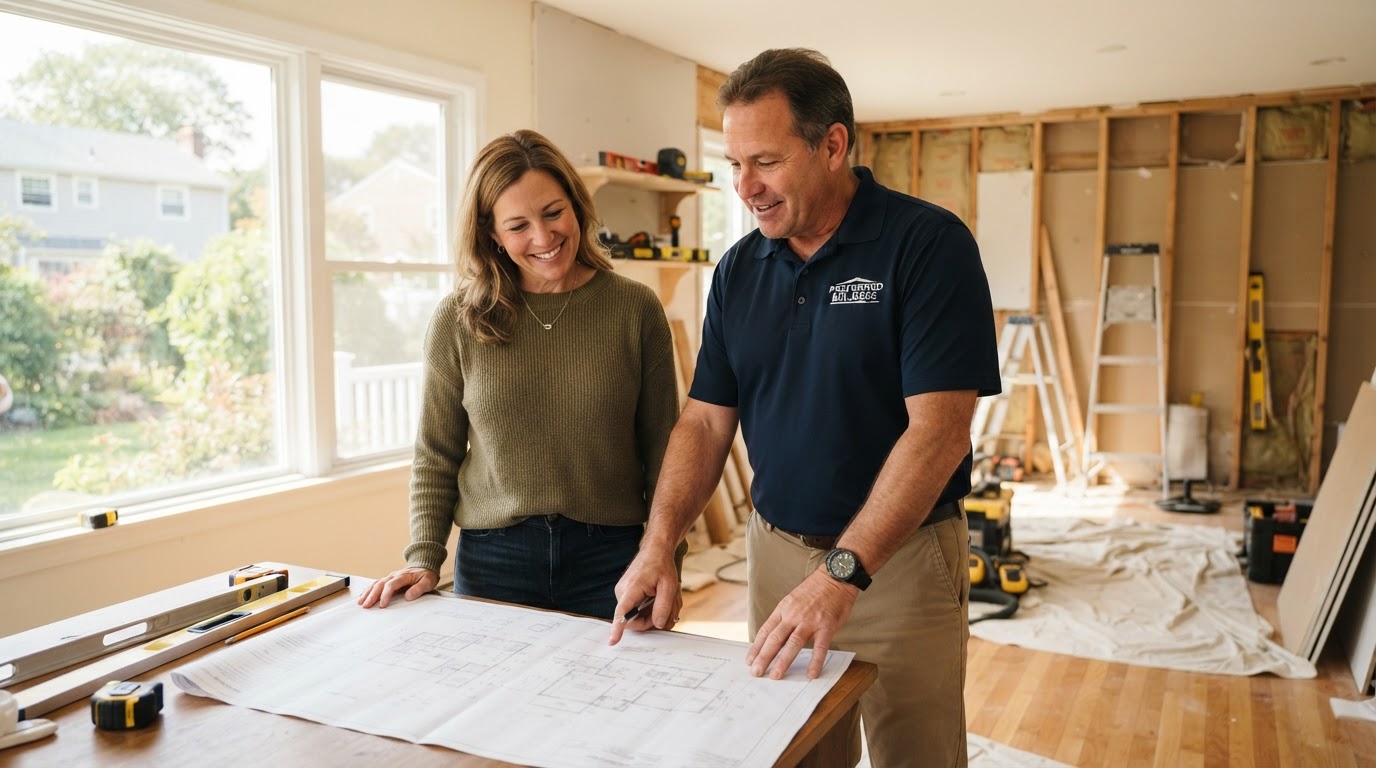
How to Choose a Reliable Contractor in Nassau County
Hiring the right contractor can make the difference between a home improvement project that goes smoothly and one that turns into months of frustration.
Whether you're renovating a kitchen, replacing a roof, remodeling a bathroom, finishing a basement, or planning a larger home improvement project, Nassau County homeowners have plenty of contractors to choose from. The challenge isn't finding someone who says they can do the job — it's finding a contractor you can trust to do it properly.
Price matters, but it shouldn't be the only consideration. Experience, licensing, insurance, communication, reputation, and a clearly defined scope of work can be just as important. Before hiring a contractor in Nassau County, here are some important steps every homeowner should consider.
1. Start With a Clearly Defined Project
Before contacting contractors, spend some time defining what you actually want done. You don't necessarily need architectural drawings or a professional scope of work, but you should be able to give each contractor roughly the same description of the project.
For example, instead of saying:
"I want to redo my bathroom."
Try to determine whether you're looking for a complete renovation, whether fixtures are being relocated, what type of finishes you're considering, and whether you're replacing things such as plumbing, electrical work, flooring, tile, lighting, or cabinetry. The clearer you are, the easier it becomes to compare estimates.
Otherwise, one contractor may quote a basic renovation while another is pricing a much more extensive project. The numbers may look dramatically different even though neither contractor is necessarily overcharging or undercharging.
2. Look for Contractors With Relevant Experience
Not every contractor specializes in the same type of work. A company that does excellent exterior work may not be the company you want handling a high-end kitchen renovation. Likewise, a contractor specializing in additions and major renovations may not be interested in smaller repair projects.
When researching Nassau County contractors, look for experience specifically related to your project. Ask questions such as:
- How many similar projects have you completed?
- Do you have photos of recent work?
- Do you regularly work in Nassau County?
- Have you completed projects in my town or neighborhood?
- Who will actually supervise the project?
- Will your own employees perform the work, or will you use subcontractors?
Local experience can be particularly valuable because contractors who regularly work in Nassau County are more likely to be familiar with local building requirements, permitting processes, suppliers, housing styles, and common issues found in Long Island homes.
3. Check Licensing and Insurance
Before hiring a home improvement contractor, verify the licensing requirements that apply to the work being performed. Nassau County regulates home improvement contractors, and certain trades or types of work may have additional licensing or permit requirements.
Don't simply assume that a contractor is properly licensed because a license number appears on an advertisement or website. Verify current information through the appropriate government agency when licensing applies.
Insurance is equally important. Ask the contractor for proof of appropriate insurance coverage and make sure the information is current. Depending on the project and company, this may include general liability coverage and workers' compensation coverage. A legitimate contractor should be accustomed to homeowners asking these questions.
4. Read Reviews — But Look Beyond the Star Rating
Online reviews can provide valuable insight, but don't choose a contractor based solely on whether the company has 4.8 stars instead of 4.6. Read the actual reviews. Look for patterns in what customers say about:
- Communication: Did the contractor return calls and keep the homeowner informed?
- Reliability: Did workers show up when expected?
- Quality: Were homeowners satisfied with the finished project?
- Cleanliness: Was the property treated respectfully?
- Problem solving: What happened when something unexpected occurred?
- Follow-up: Did the contractor address issues after the project was completed?
No established contractor will necessarily have a perfect review history. In fact, how a business responds to an unhappy customer can sometimes tell you as much as the complaint itself.
5. Get More Than One Estimate
For a substantial project, it's usually wise to speak with multiple contractors. That doesn't mean you should automatically hire the lowest bidder. Suppose three estimates come in at:
$24,000
$26,500
$15,000
The $15,000 proposal may be an incredible deal — or the contractor may be quoting a very different scope of work. Look carefully at what each estimate includes:
- Are materials included? What quality?
- Who is responsible for permits?
- Does the price include debris removal?
- Are electrical and plumbing included?
- What isn't included?
- What happens if hidden damage is discovered?
A detailed estimate makes comparison much easier and reduces the chance of misunderstandings later.
6. Be Cautious With an Estimate That's Dramatically Lower
Everyone loves saving money, and a lower price doesn't automatically indicate a problem. But when one contractor's price is dramatically below several comparable estimates, find out why.
There may be a perfectly reasonable explanation — the contractor may have lower overhead, better supplier relationships, or simply want the project. There may also be differences in materials, labor, scope, permits, insurance, or what is and isn't included.
The objective isn't to find the cheapest contractor in Nassau County. It's to find the contractor offering the right combination of quality, reliability, scope, and price for your project.
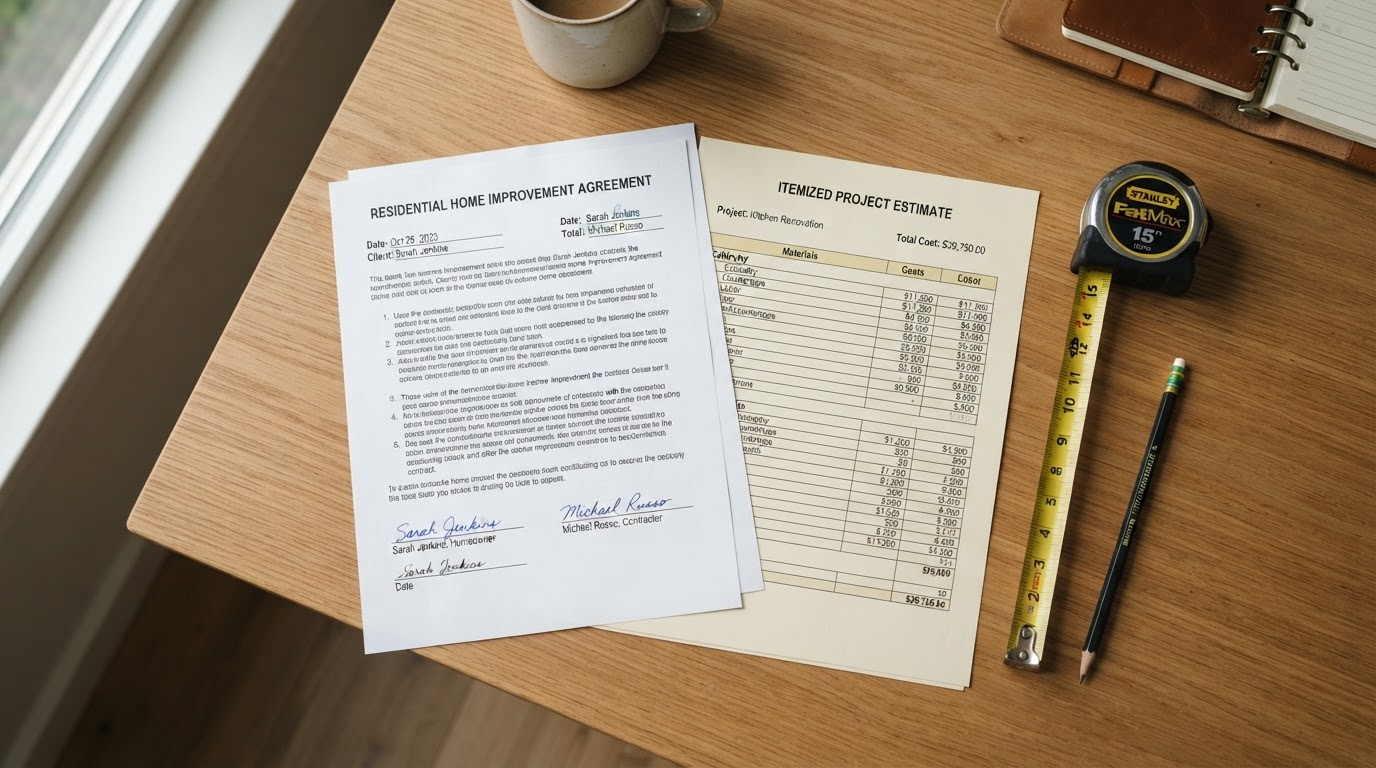
7. Get the Agreement in Writing
For significant home improvement work, don't rely on conversations and handshakes alone. Your written agreement should clearly describe the project and important terms. Depending on the job, that can include the scope of work, materials, approximate schedule, payment structure, change-order procedures, warranties, cleanup responsibilities, and other relevant details.
Read everything before signing. If something you discussed with the contractor is important to you, make sure it is reflected in the written agreement rather than assuming everyone will remember the conversation three months later.
8. Understand the Payment Schedule
Discuss payment terms before work begins. Be cautious about paying an unusually large amount of money upfront without understanding why it is required and what the payment covers. Larger projects commonly involve payments tied to stages of the work. Whatever arrangement you agree to, it should be clearly documented.
Keep records of payments, invoices, contracts, change orders, and important communications throughout the project.
9. Pay Attention to Communication Before You Hire
One of the best opportunities to evaluate a contractor occurs before you've given them any money:
- Do they answer the phone?
- Do they return messages?
- Do they arrive for appointments?
- Do they answer your questions clearly?
- Do they send the estimate when they say they will?
Construction schedules can change. Materials can be delayed. Hidden problems can appear after a wall is opened. Good communication won't prevent every problem, but it can make those problems considerably easier to manage. If communication is extremely difficult while a contractor is trying to earn your business, don't assume it will automatically improve after you've signed the contract.
10. Ask for References or Examples of Recent Work
For larger projects, consider asking to see recent examples of similar work. Photos can help, but references from previous customers can provide additional perspective. Instead of simply asking a reference, "Were you happy?", consider more specific questions:
- Was the project completed close to the expected schedule?
- Were there unexpected additional costs?
- How did the contractor communicate?
- How were problems handled?
- Would you hire the company again?
The last question can be particularly revealing.
11. Don't Ignore Your Own Experience With the Contractor
Credentials, reviews, estimates, and references are important, but you're also entering into a working relationship. For a large renovation, that relationship could last weeks or months. You should feel comfortable asking questions and discussing concerns.
That doesn't mean choosing someone simply because they're personable. It means considering the complete picture: experience, qualifications, reputation, professionalism, communication, price, and your interactions with the company.
Related guide
12 Questions to Ask a Contractor Before Hiring Them →Once you've narrowed down your candidates, take this checklist of 12 questions to every consultation — covering licensing, insurance, estimates, permits, payments, warranties, and communication.
How Much Does a Plumber Cost in Nassau County, NY? →Planning plumbing work? Learn what drives plumbing prices — service calls, emergency fees, materials, and what to ask before hiring.
Find Local Contractors in Nassau County
Finding the right professional shouldn't require searching through dozens of unrelated websites. NassauPros was created to help Nassau County homeowners discover local service professionals in one place. Whether you need a general contractor, plumber, electrician, roofer, HVAC company, landscaper, painter, or another local professional, start your search close to home.
Browse Nassau County ProsBecause when you need something done around your home, finding the right local pro should be the easy part.