
12 Questions to Ask a Contractor Before Hiring Them
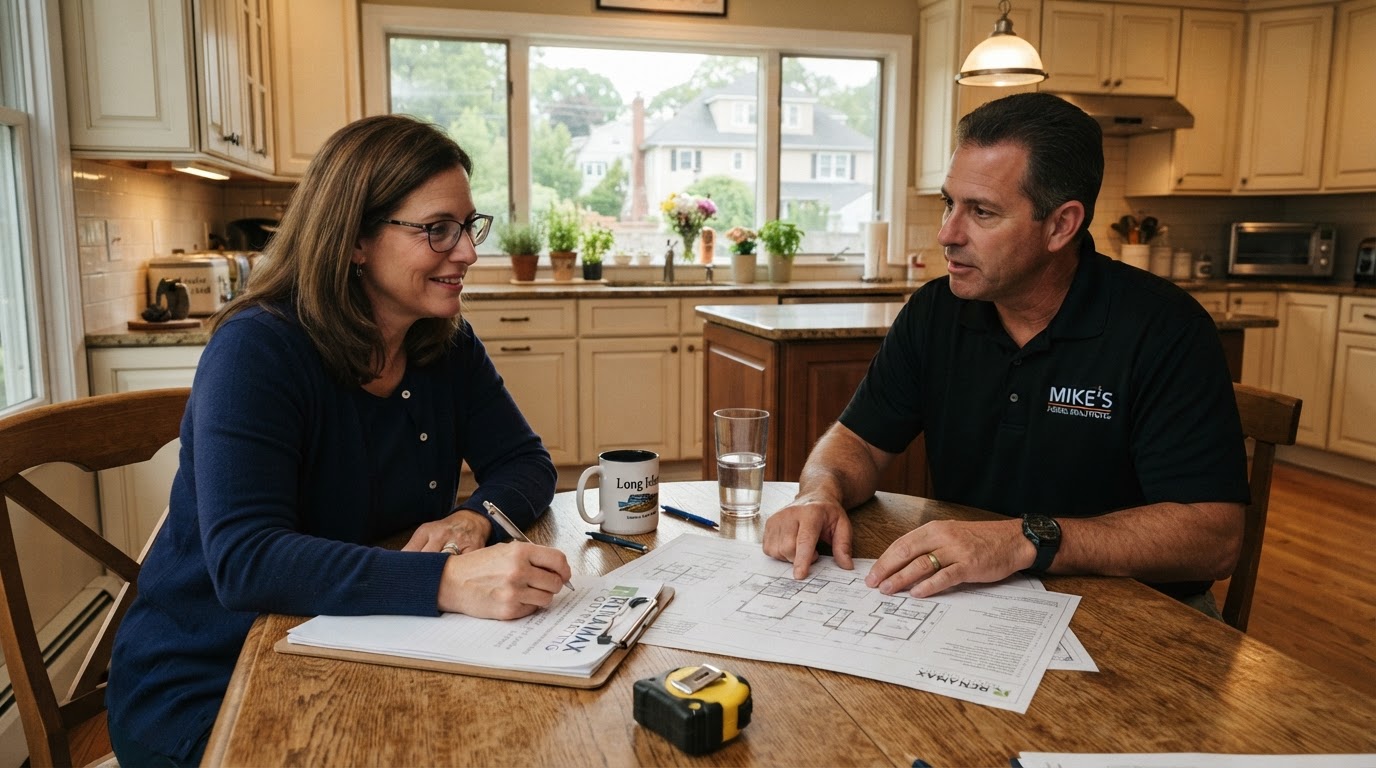
Hiring a contractor is a big decision. One of the best ways to evaluate a contractor is simply to ask the right questions before you hire them.
Hiring a contractor is a big decision. Whether you're remodeling a kitchen, replacing a roof, renovating a bathroom, building an addition, or tackling another major home improvement project, you're trusting someone with both your home and a significant amount of money.
And while online reviews, referrals, and photos of previous work are useful, they only tell part of the story. One of the best ways to evaluate a contractor is simply to ask the right questions before you hire them. A good contractor should be comfortable discussing their experience, how they operate, what you can expect during the project, and how they'll handle problems if something doesn't go according to plan.
If you're interviewing a contractor in Nassau County, here are 12 questions worth asking before signing a contract.
1. Are You Licensed for This Type of Work?
This should be one of your first questions. Depending on the type of home improvement work being performed, contractors may be subject to licensing requirements. Nassau County regulates home improvement contractors, and specialized trades or particular projects can involve additional requirements.
Ask the contractor what licenses apply to the work and verify the information with the appropriate government agency rather than relying solely on a website, business card, or advertisement. You shouldn't feel uncomfortable asking — professional contractors are accustomed to homeowners doing their homework.
2. Are You Properly Insured?
Ask what insurance coverage the contractor carries and request current documentation where appropriate. Depending on the contractor and project, this can include general liability insurance, workers' compensation coverage, and other applicable policies.
Insurance isn't the most exciting part of planning a renovation, but it can become extremely important when something goes wrong. If a contractor is reluctant to discuss insurance or provide appropriate documentation, that's something you should understand before allowing work to begin.
3. How Much Experience Do You Have With Projects Like Mine?
Years in business matter, but relevant experience matters too. Someone can be an excellent contractor and still not be the best choice for your particular project. If you're planning a kitchen renovation, ask how frequently they renovate kitchens. If you're building an extension, ask about similar additions they've completed. If you're replacing a roof, look for substantial roofing experience.
Consider asking:
- How many similar projects have you completed?
- Do you have photos of recent projects?
- Have you done this type of work in Nassau County?
- Can I see examples similar to what I'm planning?
You want someone who understands the particular challenges associated with your project — not someone figuring them out for the first time at your house.
4. Who Will Actually Be Working at My Home?
The person giving you the estimate isn't necessarily the person you'll see once construction begins. Ask who will actually perform and supervise the work.
- Will the contractor be onsite?
- Will there be a project manager?
- Does the company use its own employees?
- Will portions of the project be subcontracted?
If subcontractors are involved, ask how they're selected and who is responsible for coordinating their work. There's nothing inherently wrong with subcontracting — many excellent contractors use trusted specialists for electrical, plumbing, HVAC, tile, roofing, and other trades. The important thing is understanding who is responsible for your project.
5. Who Handles Permits and Inspections?
Don't assume permits aren't necessary simply because someone tells you, "We do this all the time." Permit requirements depend on the project and local jurisdiction.
Ask whether your project requires permits or inspections and who will be responsible for obtaining and coordinating them. If a contractor tells you a permit isn't necessary, but you're uncertain, verify that information with the appropriate local building department. It's much easier to address permit questions before construction begins than after the work is finished.
6. What Exactly Is Included in the Estimate?
This is where many misunderstandings begin. Two contractors can give you dramatically different prices while actually proposing two different projects. Ask what is — and isn't — included. Depending on the job, you'll want to understand things such as:
- Labor
- Materials
- Fixtures and finishes
- Demolition
- Disposal and cleanup
- Permits
- Electrical work
- Plumbing work
- Painting
- Delivery charges
- Site preparation
- Final cleanup
The more detailed the proposal, the easier it is to compare estimates fairly. Don't be afraid to ask:
"What could cause the final price to be higher than this estimate?"
The answer can be very informative.
7. How Do You Handle Changes and Unexpected Problems?
Home improvement projects don't always go exactly as planned. A contractor opens a wall and discovers water damage. Old wiring needs to be replaced. The homeowner decides to upgrade the flooring. A particular material becomes unavailable.
These situations don't necessarily indicate a bad contractor. They're simply realities of construction and renovation. What's important is how changes are handled. Ask about the contractor's change-order process. Ideally, additional work and costs should be clearly discussed and documented before proceeding whenever circumstances allow. That protects both you and the contractor from disagreements later.
8. What Is the Expected Timeline?
Ask for a realistic estimate of when the project can begin and approximately how long it should take. But remember: an estimated schedule is not always a guarantee. Weather, inspections, material availability, subcontractor scheduling, hidden conditions, and requested changes can all affect completion dates.
Instead of focusing solely on an exact completion date, also ask:
- When can you realistically start?
- Will someone be working here every day?
- Are you managing several projects simultaneously?
- What commonly causes delays on projects like this?
- How will you communicate schedule changes?
A realistic answer is often more valuable than an overly optimistic promise.
9. What Is the Payment Schedule?
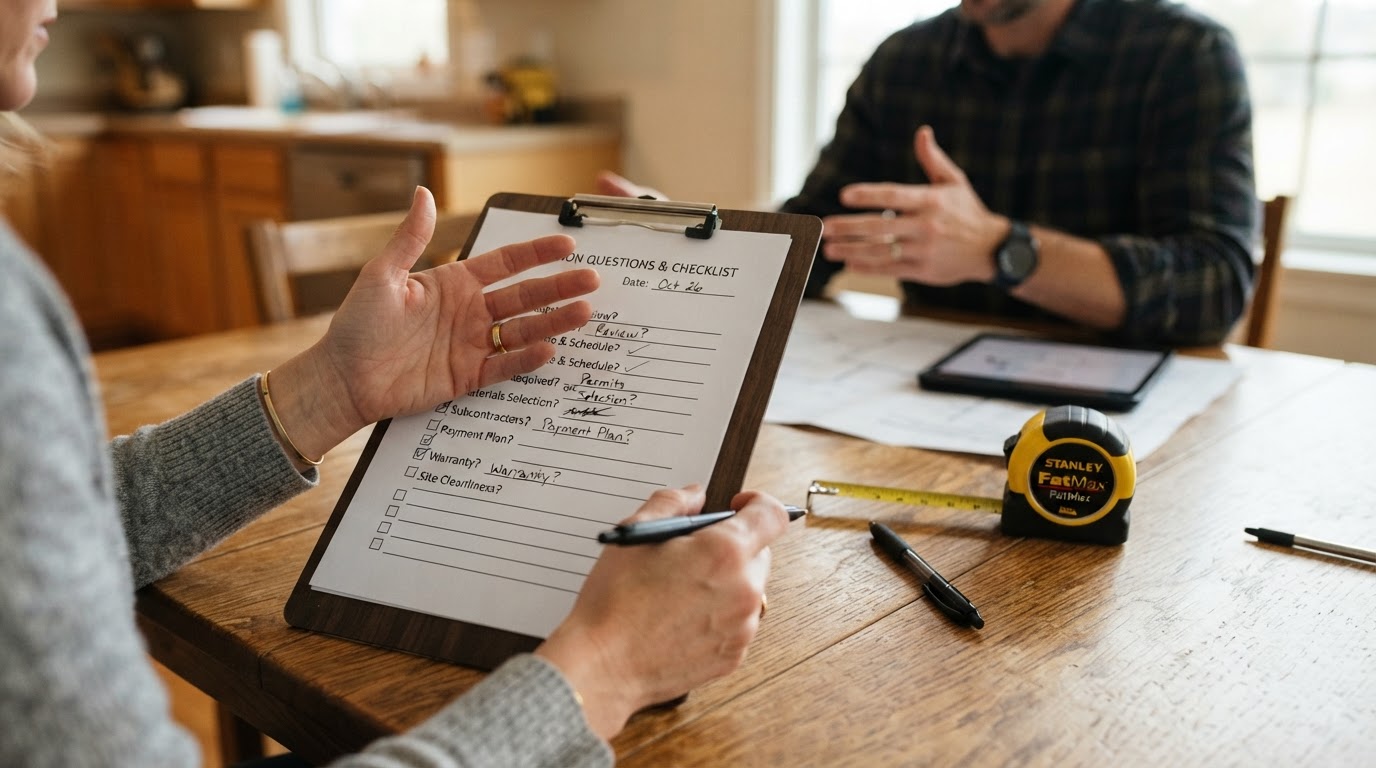
You should understand exactly when payments are expected before signing anything. Ask:
- How much is due upfront?
- When are additional payments due?
- Are payments tied to milestones?
- When is the final payment expected?
- What payment methods are accepted?
Be cautious about unusually large upfront payments without a clear explanation of what the money is for. And keep documentation of payments throughout the project. For larger jobs, a clear payment schedule helps both sides understand expectations from the beginning.
10. Can You Provide Recent References?
Online reviews are useful, but speaking with previous customers can provide additional insight. For substantial projects, consider asking for references from customers who completed similar work. And don't just ask, "Were you happy?" Ask questions that reveal more:
- Did the contractor communicate well?
- Was the project reasonably close to the original budget?
- Were there unexpected costs, and how were they handled?
- Did the crew respect your home?
- Were problems corrected?
- Would you hire the contractor again?
That last question can tell you quite a bit.
11. What Kind of Warranty or Guarantee Do You Provide?
Ask what happens if there's a problem after the project is complete.
- Does the contractor provide a workmanship warranty?
- How are manufacturer warranties on materials or equipment handled?
- How long does the contractor stand behind the work?
And most importantly, get applicable warranty terms in writing. A warranty is only useful if both parties understand what it covers, what it doesn't cover, and how long it lasts.
12. How Will We Communicate During the Project?
This question doesn't get enough attention. Many contractor disputes aren't initially about workmanship — they're about communication. The homeowner doesn't know when someone is coming. The contractor is waiting for a decision. A material is delayed, but nobody explains why work stopped. A change was discussed verbally, and the two sides remember the conversation differently.
Before hiring someone, ask how communication will work.
- Will you communicate directly with the owner?
- A project manager?
- By phone, text, or email?
- How frequently should you expect updates?
And pay attention to how the contractor communicates before you've hired them. If someone consistently misses appointments, doesn't return calls, or fails to send information they promised while they're trying to earn your business, consider what communication may be like once the project is underway.
Don't Be Afraid to Ask Questions
Some homeowners worry that asking too many questions will annoy a contractor. It shouldn't. You're potentially making a significant investment in your home, and you have every right to understand who you're hiring and how the project will be handled.
At the same time, the interview should be a two-way conversation. Good contractors will often have plenty of questions for you. They'll want to understand what you're trying to accomplish, your priorities, your budget expectations, your desired materials and finishes, and any potential complications with the property. That conversation helps both sides determine whether they're a good fit.
Compare More Than Just Price
It's tempting to collect three estimates and choose the lowest number. But price is only one part of the decision. Consider the contractor's relevant experience, licensing where applicable, insurance, reputation, communication, proposed scope of work, payment structure, professionalism, and your overall comfort with the company.
A slightly higher estimate from a contractor who clearly understands your project may ultimately represent better value than a lower estimate filled with unanswered questions. And if one estimate is dramatically lower than all the others, ask why. There may be a perfectly legitimate reason — but you want to understand the difference before making your decision.
Related guide
How to Choose a Reliable Contractor in Nassau County →A broader look at the entire hiring process — from defining your project to reading reviews and getting estimates before you even start asking these questions.
How Much Does a Plumber Cost in Nassau County, NY? →If your project involves plumbing work, learn what drives plumbing prices — service calls, emergency fees, materials, and what to ask before hiring.
Find Local Contractors in Nassau County
When you're ready to start talking with local professionals, NassauPros makes it easier to find contractors serving Nassau County homeowners. Whether you're looking for a general contractor, plumber, electrician, HVAC company, roofer, painter, landscaper, or another home service professional, NassauPros can help you start your search locally.
Find a Local ProThen take this list of questions with you. A little extra homework before hiring a contractor can save you a lot of uncertainty once the work begins.