
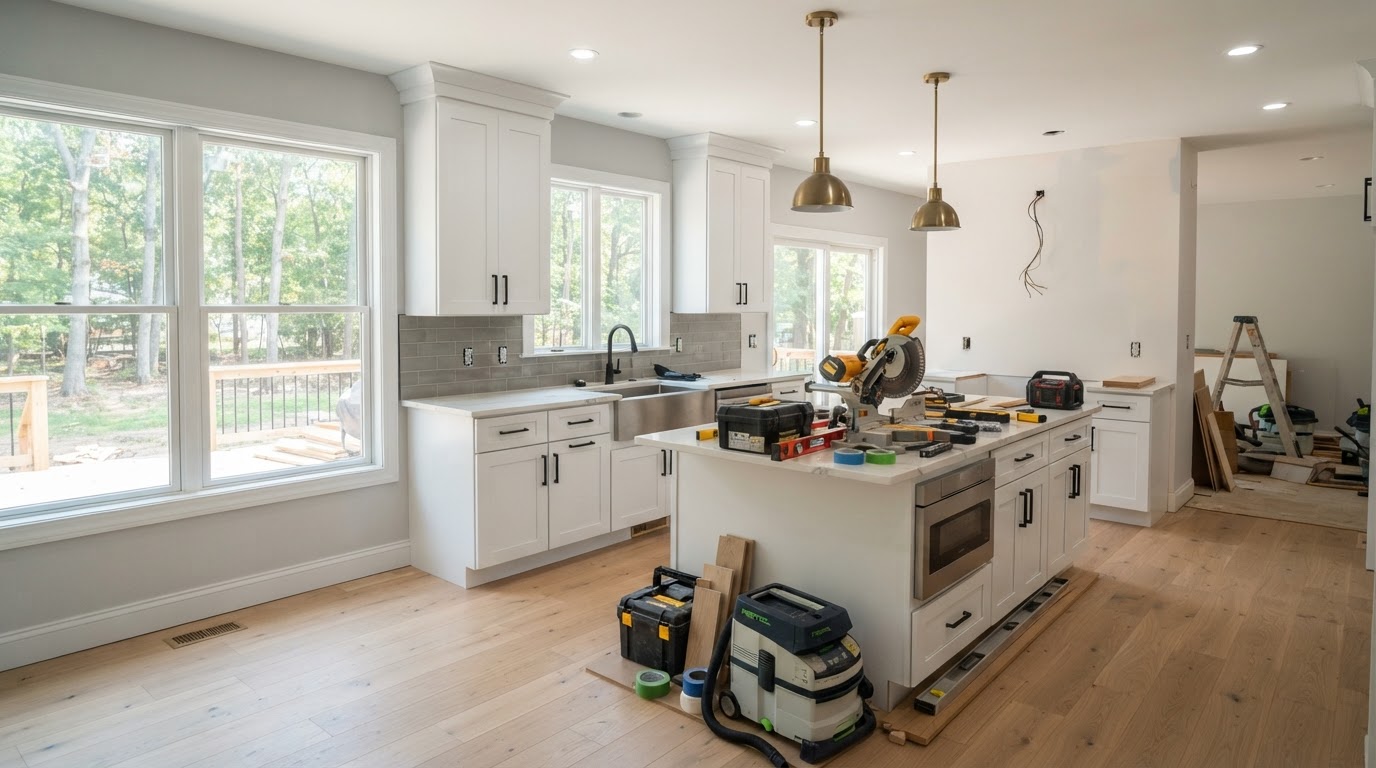
Kitchen Remodel Timeline: A Step-by-Step Guide From Planning to Completion
A kitchen remodel can completely transform your home — but it can also be one of the more complicated home improvement projects you'll undertake. Here's what to expect at every stage.
Kitchen Remodel Roadmap
A kitchen remodel can completely transform your home — but it can also be one of the more complicated home improvement projects you'll undertake.
Unlike painting a bedroom or replacing flooring, a full kitchen renovation can involve demolition, plumbing, electrical work, cabinetry, countertops, flooring, appliances, lighting, inspections, and multiple trades that all need to happen in the right order.
So how long does a kitchen remodel take? There's no single answer. A relatively simple kitchen update might be completed fairly quickly, while a major renovation involving layout changes, custom cabinetry, structural work, or permits can take several months from the first design conversation to the final walkthrough.
If you're planning a kitchen remodel in Nassau County, understanding the process ahead of time can help you set realistic expectations and avoid some common surprises. Here's a step-by-step look at a typical kitchen remodeling timeline.
Step 1: Define Your Kitchen Remodeling Goals
Before choosing cabinets or countertops, decide what you're actually trying to accomplish.
- Are you mainly updating an outdated kitchen?
- Do you need more storage?
- Is the current layout frustrating?
- Do you want a larger island?
- Are you opening the kitchen into another room?
- Will appliances remain in their existing locations?
- Are you planning to move plumbing or electrical?
Start by making three lists:
- Must Have — Things the new kitchen absolutely needs.
- Would Like — Features you'd love to include if the budget allows.
- Optional — Things you're willing to eliminate if costs start climbing.
This exercise becomes particularly valuable once you begin receiving estimates. It's much easier to make intelligent budget decisions when you already know your priorities.
Step 2: Establish a Realistic Budget
Kitchen remodeling costs can vary enormously. The size of the kitchen, cabinetry, countertops, appliances, flooring, fixtures, labor, layout changes, and level of finish can all have a major impact.
Before meeting with contractors, determine approximately what you're comfortable spending. And don't necessarily plan to spend every dollar of your available budget on the original scope. Renovations can uncover unexpected conditions:
- Older plumbing.
- Outdated wiring.
- Water damage.
- Uneven floors.
- Problems hidden behind walls or cabinets.
Having some financial flexibility can make these discoveries much easier to handle.
Step 3: Find and Interview Kitchen Remodeling Contractors
Now it's time to find professionals to discuss the project. For a substantial kitchen renovation, consider speaking with more than one contractor so you can compare approaches, scope, communication, and pricing.
Don't compare estimates based solely on the bottom-line number. One contractor may include demolition, plumbing, electrical work, permits, painting, and debris removal while another estimate excludes several of those items. Ask questions:
- Who manages the project?
- Who performs the work?
- What is included?
- What isn't included?
- How are changes handled?
- How long does the contractor realistically expect the project to take?
You can read our How to Choose a Reliable Contractor in Nassau County and 12 Questions to Ask a Contractor Before Hiring Them guides before interviewing contractors. You can also browse Nassau County contractors on NassauPros.
Step 4: Design the Kitchen and Select Materials
This is where the new kitchen begins taking shape. Depending on the scope of the project, decisions may include:
- Kitchen layout
- Cabinet style and color
- Cabinet hardware
- Countertops
- Backsplash
- Flooring
- Sink
- Faucet
- Appliances
- Lighting
- Paint colors
- Island design
- Electrical outlets
- Storage features
Try to make as many selections as possible before demolition begins. Changing your mind is much easier when the old kitchen is still intact. Changing cabinet dimensions after cabinets have been ordered is another story.
It's also important to make selections together rather than independently. The refrigerator dimensions can affect cabinetry. The sink can affect the sink base. The cooktop may affect cabinetry and electrical or gas requirements. The countertop design depends on the final cabinet layout. Everything interacts.
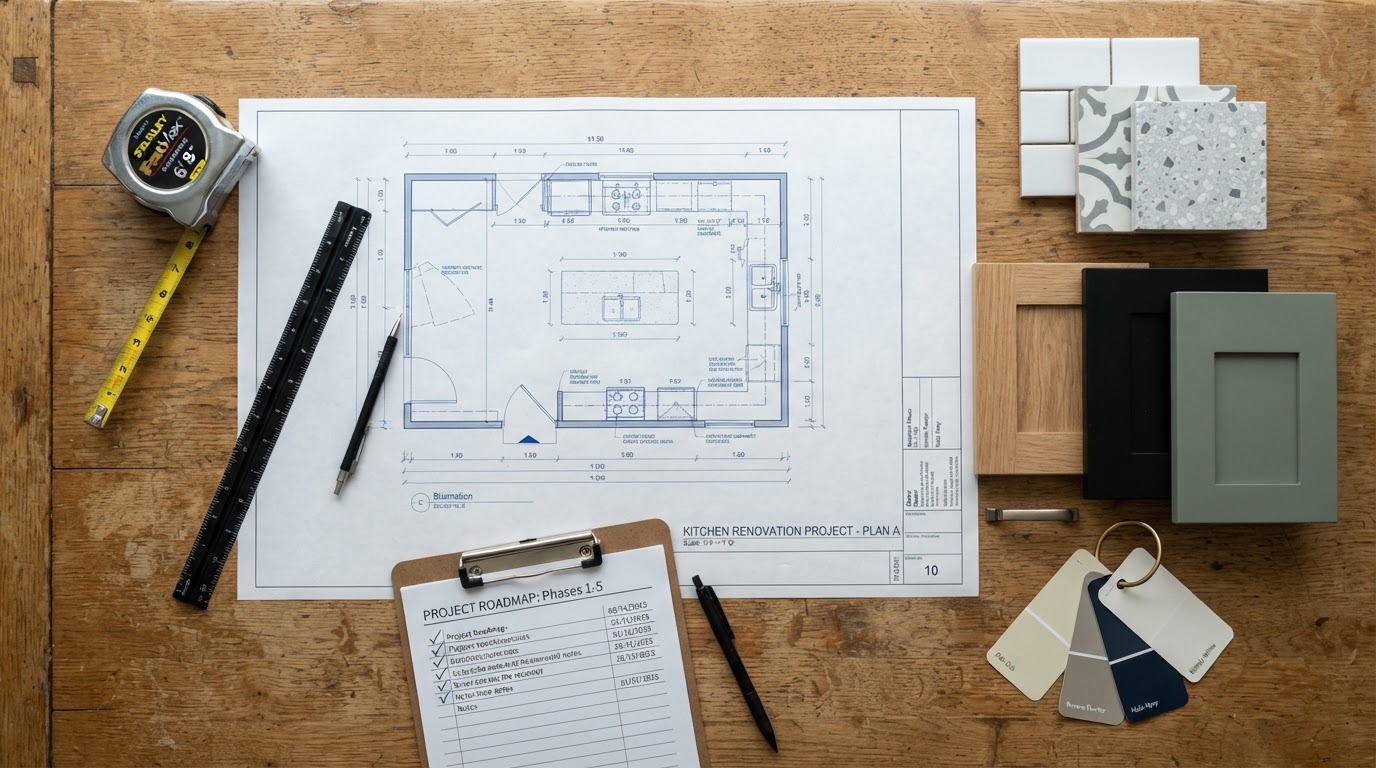
Step 5: Finalize the Scope, Contract and Schedule
Once the design and major selections are established, the contractor can develop a more precise scope of work. Before signing, review the agreement carefully. Depending on the project, it may address:
- Scope of work
- Materials
- Allowances
- Payment schedule
- Estimated schedule
- Change-order procedures
- Cleanup and debris removal
- Responsibilities for permits
- Warranty information
- Items specifically excluded from the price
If something is important to you, don't rely solely on a verbal conversation. Make sure expectations are documented appropriately.
Step 6: Permits and Approvals
Not every kitchen renovation requires the same permits or approvals. A cosmetic renovation where cabinets and finishes are simply replaced can be very different from a project involving structural changes, significant electrical work, plumbing relocation, gas work, or removing walls.
Requirements can also depend on the municipality and exact scope. Your contractor or design professional should help determine what applies to the project, but homeowners should understand what permits and inspections are required before work begins.
Never assume permits aren't necessary simply because someone says: "We do this all the time."
When uncertain, verify with the appropriate local building department.
Step 7: Order Long-Lead Items
This step can have a huge effect on the overall kitchen remodel timeline. Cabinets, appliances, specialty fixtures, custom windows, certain tile, and other products may take weeks — or longer — to arrive.
Ideally, major materials should be ordered early enough that construction isn't unnecessarily stalled waiting for them. This is especially important for cabinetry. Demolishing your functioning kitchen and then discovering the cabinets won't arrive for another eight weeks isn't anyone's idea of a good renovation.
Ask your contractor which materials should be onsite before demolition begins.
Step 8: Prepare for Life Without a Kitchen
This is one of the most overlooked parts of kitchen remodeling. For some period of time, your kitchen may be partially or completely unusable. Before demolition, consider setting up a temporary kitchen elsewhere in the house. A basic temporary setup might include:
- Microwave
- Coffee maker
- Toaster oven
- Small refrigerator
- Folding table
- Disposable or easily washable dishes
- Frequently used pantry items
If weather permits, an outdoor grill can also become surprisingly valuable. Plan where you'll eat, wash dishes, prepare basic meals, and store food. A little preparation can make the construction period considerably less disruptive.
Step 9: Demolition
Now the transformation becomes real. Existing cabinets, countertops, appliances, flooring, walls, or other materials are removed according to the project scope.
Demolition can also reveal things nobody could see during the estimate:
- Water damage.
- Old plumbing.
- Improper wiring.
- Structural issues.
- Mold or deterioration.
- Uneven framing.
This doesn't mean something went wrong with the remodel. Hidden conditions are one reason remodeling an existing home can be less predictable than building something entirely new. If unexpected conditions are discovered, make sure you understand the proposed solution and any additional cost before substantial extra work proceeds.
Step 10: Structural Work and Framing
Not every kitchen remodel requires structural work. But if you're removing walls, changing doorways, creating openings, relocating windows, or significantly altering the room, framing or structural work may happen after demolition.
Larger changes may require plans, engineering, permits, or inspections. Once the structure and framing are complete, the new kitchen begins taking its physical shape.
Step 11: Rough Plumbing, Electrical and HVAC
Before walls are closed, the systems behind them need to be addressed. This may include relocating or installing:
- Plumbing: sinks, dishwashers, refrigerators, pot fillers, gas or water lines.
- Electrical: outlets, appliance circuits, switches, under-cabinet lighting, pendant lights and other fixtures.
- HVAC: vents or ductwork affected by the new layout.
This is also why finalizing your layout early is so important. Moving the sink after rough plumbing has been completed is considerably different from moving it on a drawing. If you need plumbing work, you can also browse plumbers in Nassau County or read our guide to plumbing costs in Nassau County.
Step 12: Rough Inspections
Where inspections are required, certain work may need approval before insulation or drywall covers it. Scheduling can affect the timeline, so there may occasionally be days when very little appears to be happening at the house.
That doesn't necessarily mean the project has stalled. The contractor may be waiting for an inspection or approval before proceeding to the next stage.
Step 13: Insulation, Drywall and Wall Preparation
Once applicable rough work is complete, walls can be closed. That may involve insulation, drywall installation, taping, compound, sanding, and preparation for paint or other finishes.
This stage can feel slower than expected because some materials need time to dry between applications. But now the room finally starts looking like a kitchen again instead of a construction site.
Step 14: Flooring
The exact sequence for flooring can vary depending on the flooring material, cabinetry installation method, and contractor's approach. Some floors are installed before cabinetry. Others are installed afterward. Your contractor should determine the appropriate sequence for your specific materials and design.
Either way, flooring represents another major visual milestone. If you're replacing your floors, you can browse Nassau County flooring professionals.
Step 15: Cabinet Installation
For many homeowners, this is the moment the kitchen finally starts feeling real. Base cabinets, wall cabinets, pantry units, islands, trim, panels, and other cabinetry components are installed.
Cabinet installation needs to be accurate because countertops and appliances depend on proper placement. Once base cabinets are secured, final countertop measurements can usually be confirmed if they weren't already. You can browse Nassau County cabinet makers for your project.
Step 16: Countertop Fabrication and Installation
For materials requiring fabrication, such as many stone or engineered countertops, final measurements may be taken after the base cabinets are installed. The countertop is then fabricated and installed.
The exact turnaround varies by material, fabricator, complexity, and current workload. This can create another period where the kitchen looks almost finished — but isn't quite usable yet. You can browse Nassau County countertop and flooring stores for materials.
Step 17: Backsplash, Painting and Finish Work
Now the finishing layers begin. Depending on the project, this stage can include:
- Backsplash tile
- Grout
- Painting
- Cabinet hardware
- Trim
- Moldings
- Finish carpentry
- Touch-ups
These details may seem small compared with demolition or cabinet installation, but they have a major impact on how polished the completed kitchen feels. If painting is part of your project, you can browse Nassau County painters.
Step 18: Appliances, Plumbing Fixtures and Electrical Finishes
Appliances are installed or connected. The sink and faucet are connected. The dishwasher is installed. Lighting fixtures, switches, outlets, and cover plates are finished. The refrigerator is connected where applicable. Now you finally begin getting your kitchen back.
If electrical work is involved, you can browse Nassau County electricians.
Step 19: Final Inspections
Projects requiring permits may require final inspections. Depending on the scope, there may be electrical, plumbing, building, or other applicable inspections. Your contractor should explain what remains and what documentation or approvals are required for completion.
Step 20: Final Walkthrough and Punch List
Don't rush the final walkthrough. Look carefully at the completed project with your contractor. You may find small items requiring attention:
- A cabinet door needs adjustment.
- Paint needs touching up.
- A piece of trim needs finishing.
- Hardware needs alignment.
- A fixture needs adjustment.
These remaining items are commonly called a punch list. Create the list, agree on what needs to be completed, and keep track until the remaining work is finished.
So, How Long Does a Kitchen Remodel Take?
For many homeowners, the biggest mistake is measuring the project only from demolition to completion. The true kitchen remodeling timeline starts well before demolition:
Planning → Contractor Selection → Design → Material Selection → Permits → Ordering → Construction → Inspections → Completion.
A relatively straightforward renovation with readily available materials may move quickly. A major kitchen transformation involving custom cabinets, structural changes, relocated utilities, extensive permits, or specialty materials can take several months from initial planning through completion.
And every project is different. Rather than focusing on an exact number of weeks, ask your contractor for a realistic schedule based on your specific project. Then build some flexibility into your expectations.
Related guides
How to Choose a Reliable Contractor in Nassau County →The broader hiring process — from defining your project to reading reviews and getting estimates.
12 Questions to Ask a Contractor Before Hiring Them →Take this checklist of questions to every contractor consultation.
How Much Does a Plumber Cost in Nassau County, NY? →If your renovation involves plumbing work, learn what drives plumbing prices.
Planning a Kitchen Remodel in Nassau County?
A successful kitchen renovation starts with finding the right professionals. NassauPros helps Nassau County homeowners connect with local home improvement professionals serving their communities. Depending on your project, you may need several different types of pros:
Before hiring, we also recommend reading our guides on choosing a contractor and the questions to ask before you sign.
Find a Nassau County ProA kitchen remodel is a big project. But when you understand the process, plan ahead, and work with the right local professionals, those weeks of construction can lead to a kitchen you'll enjoy for years to come.