Your phone is ringing. Your team is busy. But the jobs coming in aren't necessarily the jobs you want.
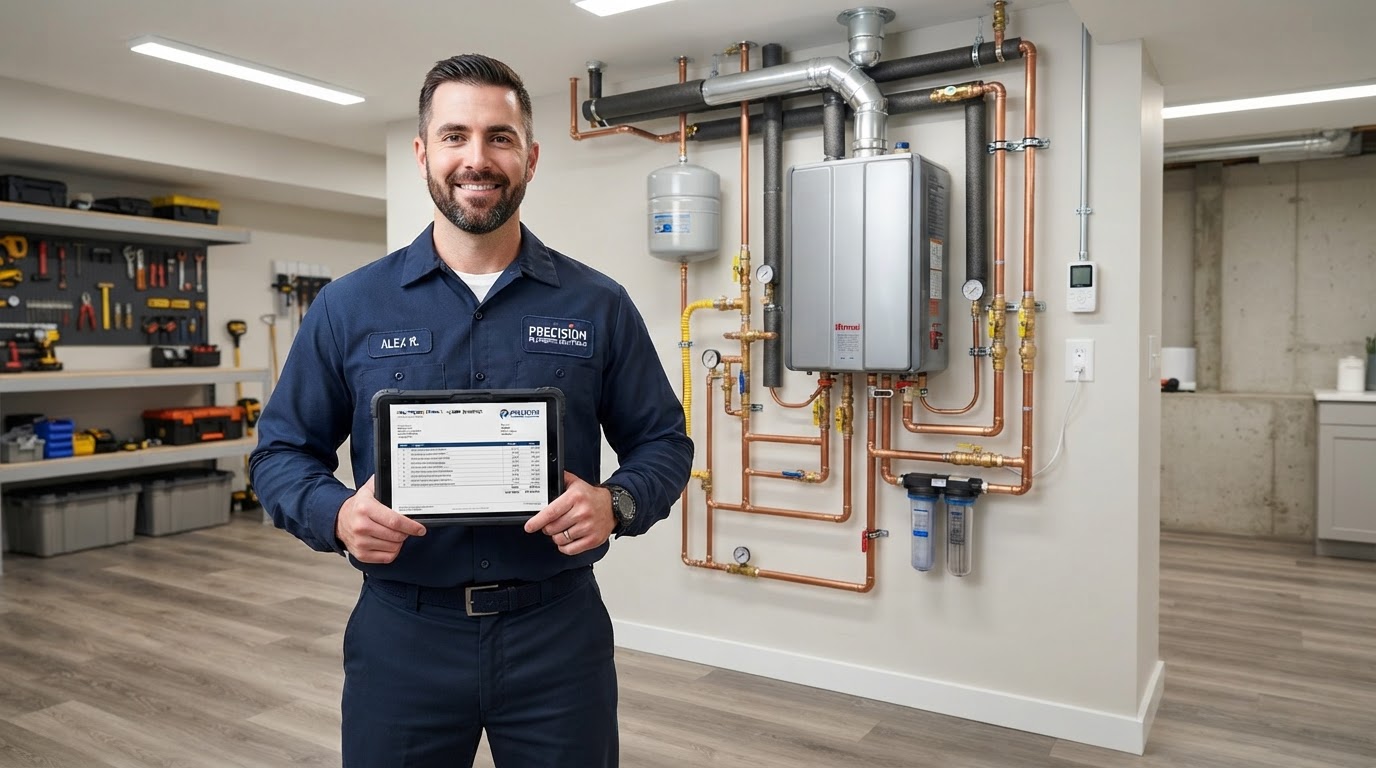
A plumber might spend the week handling small repairs across a wide service area while hoping to book more water heater replacements or sewer line projects.
An HVAC contractor might want more system replacements. A landscaper might want more design-and-installation projects. A cleaner might want more recurring accounts.
Getting more calls can help, but call volume alone doesn't tell you whether your marketing is moving the business in the right direction.
To attract more valuable work, start by defining that work. Then make your website, local SEO, social content, and advertising support the same goal.
Here's how to build that approach.
1Define What a High-Value Job Means for Your Business
A large invoice doesn't automatically mean a profitable job.
Materials, labor, travel, equipment, subcontractors, and return visits all affect what the business earns from the work. A complex project can also occupy your team longer than expected.
High-value work might mean:
Review your recent jobs. Which ones were profitable, ran smoothly, and fit the business you want to build?
For a plumber, water heater replacement may be a priority. For another plumber, nearby service calls or recurring property-management work may be more valuable.
Choose based on your numbers and capacity.
- Strong contribution after direct job costs
- Efficient use of your team's time
- Repeat or recurring business
- A good match for your skills and equipment
- Work within a practical service area
- Projects you can complete reliably and confidently
Your first task: identify two or three services or customer relationships you want more of, and explain why each matters.
2Give Your Marketing a Specific Job to Do
“Get us more business” is difficult to turn into a focused plan.
A clearer brief might be:
“We want more inquiries for residential water heater replacement in the communities our team already serves.”
That statement gives you a service, an audience, and a coverage area. Add realistic capacity and a way to measure results.
For example:
“We can accommodate two additional installations per week. We'll track suitable inquiries, estimates, completed installations, and acquisition cost.”
This is an internal planning example, not a promise that marketing will deliver a particular number of jobs.
Keep the goal focused enough to guide your decisions. You can still serve customers who need other work while directing a campaign toward a priority service.
Your first task: write a one-sentence marketing goal for your preferred work.
3Build Website Pages That Help Customers Understand the Value
If you want more water heater replacements, give that service a useful page.
Explain the situations you assess, equipment you work with, your process, and what the customer can expect when contacting you.
Include genuine photos and relevant reviews. Answer the questions that often hold people back:
Publish only details that accurately describe your service.
Make the next step specific:
“Request a Water Heater Assessment”
That gives the visitor a clearer path than a general “Contact Us” button.
Your homepage can highlight priority services too. Check that the photos and examples show the kind of work you want more of.
- Can you assess my existing system?
- Do you install the type of unit I'm considering?
- What affects the estimate?
- What happens to the old equipment?
- What information should I have ready?
Your first task: create or improve one dedicated page for a priority service.
4Use Local SEO to Support Those Same Services
Customers can search for a specific job, such as “water heater replacement in [town],” as well as broader terms such as “plumber near me.”
Make your website's service and coverage information clear. Use accurate page titles, helpful headings, and natural wording.
Review your Google Business Profile categories and services. Keep them truthful to the business as a whole; don't change your primary category simply to chase whichever job you want this month.
Your profile and website should tell a consistent story about what you do and where you work.
Google says local ranking depends mainly on relevance, distance, and prominence. You can improve your information and online presence, but listing a service or town does not guarantee a particular position.
Create individual area pages only when you can provide useful information for customers there.
Your first task: check whether your priority service is clearly represented on your website and profile.
5Use Social Content to Show the Work Customers Can Hire You For
Look at your recent posts. What would a potential customer conclude your business specializes in?
If you want more installation projects but only post generic greetings and occasional stock photos, you have an opportunity to make the service more visible.
Use actual work to create helpful content:
For a plumber, a post might explain why a homeowner chose to replace a water heater after an assessment. Describe the decision without suggesting every similar problem requires replacement.
A landscaper could show how a design addressed drainage and usable outdoor space. A cleaner could explain how a recurring service schedule works.
Social content gives prospective customers material to evaluate when they check your business. It can also introduce a service before someone is ready to search for it.
- A completed project with a short explanation
- A before-and-after photo, with permission
- A video explaining your assessment process
- An answer to a common service question
- A customer testimonial used accurately and with appropriate permission
Your first task: plan four posts around one priority service using real examples and customer questions.
6Direct Ads Toward the Work You Want
Advertising should continue the same message.
For Google Search campaigns, organize targeting and ads around the chosen service, then send visitors to the relevant page.
A person responding to an ad about water heater replacement should arrive at a page that explains water heater replacement.
Review available search-term data and use negative keywords where appropriate to exclude unrelated intent. Employment searches or parts-only searches may be exclusions for a contractor selling installation services.
Be careful with exclusions. A person comparing costs may be a serious customer, so don't automatically block every search containing “price” or “cost.”
For Google Local Services Ads, review the available job-type and service-area settings. Select services you genuinely provide and areas you can support.
LSAs use different controls from standard Search campaigns. They don't let you isolate every inquiry as precisely as a bespoke service campaign, and a billable lead does not guarantee a booked job.
Social ads can support awareness and inquiries for suitable projects. Decide their role before choosing the campaign, budget, and creative.
Your first task: review one campaign and check that its targeting, message, and destination support the same service.
7Help Customers Evaluate Quality Before They Compare Price
Customers need reasons to understand your offer.
Explain what is included, how you assess the work, what options you discuss, and what happens after the job. Describe genuine qualifications and warranties accurately, with their terms where relevant.
For a water heater project, customers may want to understand equipment selection, installation requirements, removal of the old unit, and who handles each part of the work.
Clear information helps them compare services more fairly.
If you offer financing, publish accurate terms and eligibility information. If you don't, you can still explain the estimate process and available service options.
An on-site AI assistant can help answer approved questions and collect an inquiry when configured for that purpose. Give it accurate information and a clear route to your team for anything it cannot confirm.
Your first task: add a short "What to Expect" section to your priority service page.
8Qualify Inquiries and Follow Up on Estimates
A suitable inquiry can still be lost through poor handling.
Create an intake process that establishes:
Ask practical questions without turning the conversation into an interrogation. Some customers won't know exactly what they need; your process should help them reach the appropriate assessment.
Explain whether they are requesting an appointment, an estimate, or a callback. Confirm what your team will do next.
For larger projects, the customer may need time to compare options. Follow up on open estimates with a helpful message:
“Hi [First Name], this is [Business Name] following up on your water heater estimate. Do you have any questions about the options or next steps? We're happy to help.”
Use appropriate communication permission and honor requests to stop.
- The service requested
- The property location
- The customer's timeframe
- Information needed for an assessment
- The next step
Your first task: assign responsibility for new inquiries and open estimates so both receive attention.
9Measure the Work You Actually Won
Track more than calls, clicks, and likes.
Record the service requested, whether the inquiry fit your business, whether an estimate was issued, and whether the work was completed.
Then compare acquisition costs with the value of the completed jobs. Include ad spending, management fees, and other relevant marketing costs.
Consider this hypothetical example:
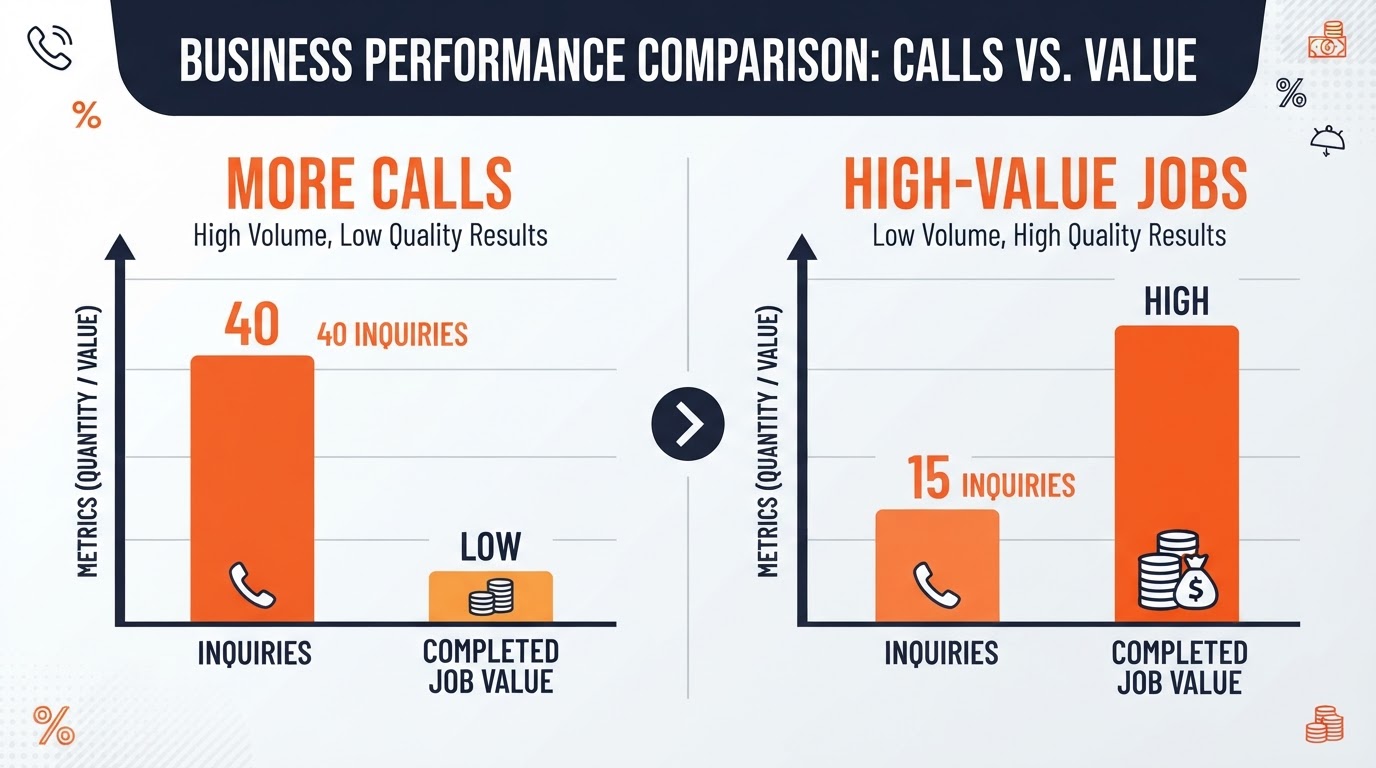
One campaign generates 40 inquiries and 20 completed jobs, each contributing $150 after direct job costs. That is $3,000 before marketing costs and overhead.
Another generates 15 inquiries and 6 completed jobs, each contributing $700 after direct job costs. That is $4,200 before marketing costs and overhead.
The second campaign produces fewer inquiries but more contribution in this example. To judge which is better, you still need to compare marketing spend, time required, capacity, and other operating costs.
Track the mix of work, not just total lead volume.
Your first task: add a service-type field and job outcome to your lead records.
How the Four Channels Work Together
Imagine a plumbing business that wants more residential water heater installations.
Its website has a clear service page with real photos, useful answers, and an assessment request.
Its local SEO work improves the service information on that page and the Business Profile, while maintaining accurate coverage and listings.
Its social content shows actual installations and answers common questions about the process.
Its advertising promotes the service to relevant prospects and uses the appropriate landing page or lead settings.
When an inquiry arrives, the team has a consistent assessment and follow-up process.
Each channel supports the same business goal. Results from completed jobs help guide the next round of improvements.
You don't need to launch everything at full scale on day one. Build the foundation, choose suitable channels, and expand based on what you learn.
A Practical Starting Plan
Choose one priority service and confirm why it is valuable to the business.
Build the service page and collect credible examples of your work. Check the matching profile information and local visibility.
Create a small set of helpful social posts and launch an advertising test you can support operationally.
Track inquiries through estimates and completed jobs. Review the results before expanding to another service.
This gives you a concrete starting point for a broader marketing program.
Want Us to Build and Manage the Whole Plan?
You can follow these steps yourself. Coordinating the website, local SEO, social content, ads, and reporting takes ongoing work.
At NassauPros, our full done-for-you marketing package brings those pieces together around your business goals.
Website: We build or improve pages that explain your priority services, show your work, and make contacting you easy. Our Smart Website option can add an on-site AI voice assistant configured around your business information.
Local SEO: We improve your local search foundation through profile optimization, useful service content, appropriate area pages, listing accuracy, and technical website checks.
Social media: We turn your services, project photos, customer questions, and approved testimonials into content that helps people understand the work you do.
Advertising: We set up and manage suitable campaigns around your services and coverage, monitor spending and lead quality, and review results against booked and completed work.
It starts with a conversation about the jobs you want more of, your capacity, and what makes those jobs worthwhile. From there, we build a coordinated plan and handle the ongoing marketing work.
Contact NassauPros for a marketing strategy assessment. Tell us which services you want to grow, and we'll show you how a full done-for-you package can support that goal.
Editorial Sources
- Google: Tips to improve local rankinghttps://support.google.com/business/answer/7091
- Google: Manage your business categoryhttps://support.google.com/business/answer/7249669
- Google: SEO Starter Guidehttps://developers.google.com/search/docs/fundamentals/seo-starter-guide
- Google: About negative keywordshttps://support.google.com/google-ads/answer/2453972
- Google: Edit LSA industries, service areas, and job typeshttps://support.google.com/localservices/answer/12491364
- Google: How LSA leads workhttps://support.google.com/localservices/answer/7195435