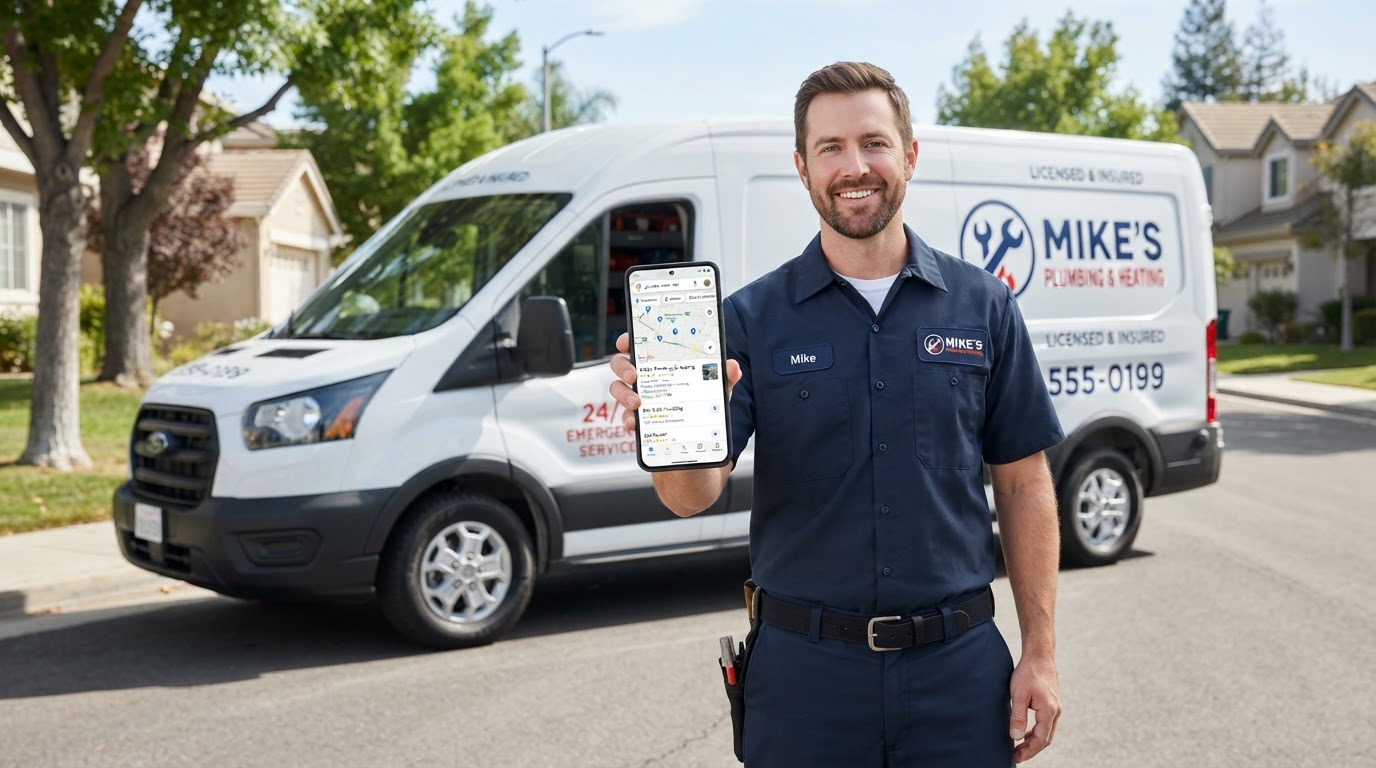
A homeowner has a clogged drain and searches “plumber near me.”
Someone else needs help with a broken air conditioner, an electrical problem, or a lawn that needs attention. They turn to Google to find a nearby business.
Does your company appear where those customers are looking? And when it does, does the information help them choose you?
Local SEO—local search engine optimization—is the work of improving how your business appears in relevant local searches. It involves your Google Business Profile, your website, your reputation, and the information people can find about your company.
You can start with practical improvements. Here's how, using a plumbing company as an example.
1Understand What “Near Me” Really Means
You don't need to put “near me” in every sentence on your website.
Google uses what it knows about the searcher's location to help identify nearby businesses. For local results, Google says its main considerations are relevance, distance, and prominence.
Relevance: How well your business matches what the customer needs.
Distance: How far your business is from the person searching.
Prominence: How well-known your business is, including signals such as reviews and links from other websites.
That means two people searching for “plumber near me” from different neighborhoods can see different results.
Your job is to make your services and actual coverage clear, strengthen your online presence, and give customers credible reasons to contact you.
Your first task: choose the services and nearby communities that matter most to your business.
2Know Where You Want to Appear
Local searches can show several kinds of results, including paid ads, a map with business listings, and website results.
Your Google Business Profile is central to your presence in Maps and local business results. Your website pages can also appear in the regular search results.
These are related parts of your visibility, but they aren't the same thing. A website page ranking well does not guarantee the corresponding business will appear in the top map positions.
Paid advertising is a separate way to reach customers. Buying ads does not buy a higher unpaid local ranking.
A local SEO plan should consider both your profile and your website, then track each appropriately.
Your first task: look at relevant searches and note whether your competitors appear in Maps, website results, paid ads, or several of those places.
3Get Your Google Business Profile Foundation Right
Claim and verify your profile, then review the information customers see.
Check your business name, primary category, services, phone number, website link, hours, and service area. Use real photos that accurately represent your work.
For a general plumbing company, “Plumber” may be the appropriate primary category. Add other available categories only when they genuinely describe the business.
Use the business name customers know. Don't add towns, services, or claims such as “best plumber” to the name simply to target searches.
If you travel to customers and don't serve them at your address, hide that address and configure your profile as a service-area business.
Avoid creating extra profiles for towns where you don't have an eligible business location.
Your first task: correct inaccurate information before trying more advanced SEO work.
4Make Your Website Say What You Do and Where You Do It
A homepage that says “Welcome” and “Quality Service” leaves customers with basic questions.
Use an accurate, specific headline:
“Plumbing Repairs and Water Heater Service in Nassau County”
Then explain the work you perform and the communities you serve.
For example:
“We help homeowners with leaks, clogged drains, and water heater problems in [communities actually served]. Contact our team to discuss your plumbing needs and scheduling.”
Make the website and Business Profile agree on important business details.
For a service-area business, you can explain your coverage without presenting a home address as a customer-facing storefront.
Use town and service names naturally. Write so a homeowner can understand the page without reading through a list of repeated search phrases.
Your first task: revise your homepage headline and opening paragraph to make your service and coverage clear.
5Create Useful Pages for Your Main Services
One short page listing everything your business does may leave specific customer questions unanswered.
Consider dedicated pages for your important services. A plumber might have pages for drain cleaning, water heater repair and replacement, leak repair, and sewer line work.
Each page should explain the service, the situations you handle, where it is available, and what happens when someone contacts you.
Add real examples and photos where appropriate.
For a water heater page, useful information might include the equipment types you service, how an assessment works, and what affects repair or replacement options.
Give the page a clear title and heading. An example could be:
“Water Heater Repair and Replacement in Nassau County | Smith Plumbing”
Use a brief search description that accurately summarizes the page. Google may choose different text for the result, so don't treat that description as a guaranteed display.
Your first task: improve the page for one priority service before expanding to the rest.
6Build Local Pages When You Have Something Useful to Say
If you serve several communities, individual area pages can help customers understand the service available in their town.
But each page needs a purpose beyond changing the town name.
A useful page might include:
If you have permission, a real project photo can make the page more helpful.
Don't imply that you have an office in a town when you only travel there. Say that you serve the area.
Avoid publishing dozens of nearly identical pages simply to capture searches. Google's spam policies include doorway abuse: pages created to rank for similar queries that funnel visitors toward essentially the same destination.
If you don't have enough meaningful information for separate pages, start with a clear service-area page.
- The services available in that community
- Actual examples of local work
- Relevant customer questions
- Honest coverage and scheduling information
- A clear way to request service
Your first task: choose one important community and decide whether a dedicated page would help its customers.
7Make Sure Google Can Find Your Important Pages
A helpful page needs to be accessible to search engines.
Set up Google Search Console for your website. Use its URL Inspection tool to check important pages and investigate indexing issues.
A sitemap can help Google discover URLs, but submitting one does not guarantee indexing or ranking.
Make your service pages accessible through normal website links. A visitor should be able to move from your homepage to the service they need.
If a page isn't appearing, ask your website provider to investigate whether it is blocked from indexing, redirects incorrectly, or has another technical problem.
Also check the website on a phone. Make sure text is readable, pages respond reliably, and contact buttons work.
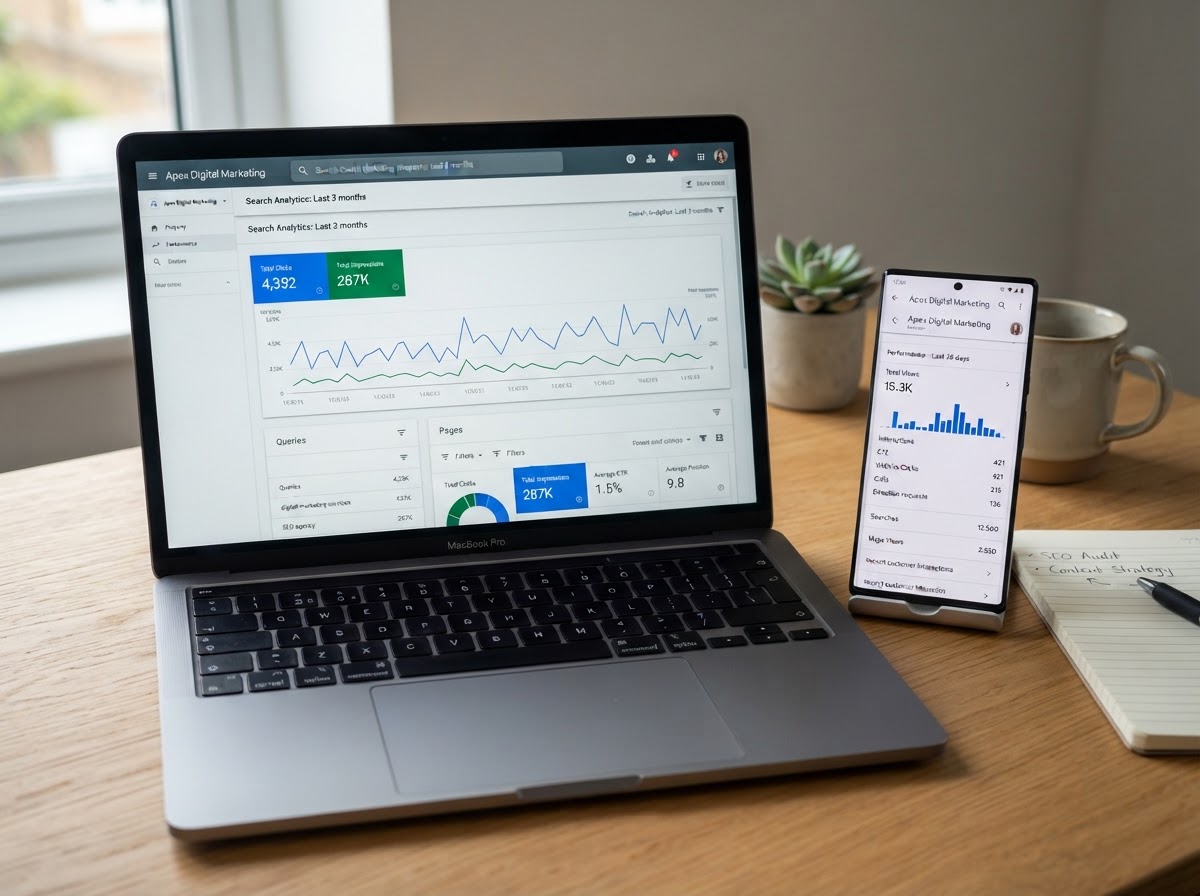
Your first task: inspect your homepage and top service page in Search Console.
8Keep Business Listings Accurate
Check the places customers are likely to find your business beyond your website: relevant directories, map services, trade listings, and local business organizations.
Correct old phone numbers, outdated website links, inaccurate hours, and listings that suggest you offer services you no longer provide.
Use the same real-world business identity across these sources. Formatting differences such as “Street” versus “St.” are less useful to worry about than a phone number that reaches the wrong company.
For a home-based service business, use appropriate service-area listing options rather than exposing a private address just to make every listing look identical.
Choose listings based on relevance and credibility. Being listed on hundreds of low-quality websites is not a substitute for useful information and a strong customer experience.
Your first task: search your business name and correct the most visible outdated listings.
9Build Your Reputation and Local Connections
Request honest Google reviews through a consistent process, and respond professionally to feedback.
Don't buy reviews, offer rewards, or invite only customers you expect to rate you positively.
Beyond reviews, look for genuine connections that help people discover your business.
Examples might include a local chamber membership, a relevant trade association, a legitimate supplier directory, or coverage of a community project your business actually supported.
A real mention or link can introduce your business to a useful audience. Google also identifies links and reviews as factors in local prominence.
Avoid buying links for ranking purposes or arranging artificial networks of sites. Build visibility around relationships and work you can stand behind.
Your first task: improve your review-request routine and identify one relevant local organization or business relationship worth developing.
10Publish Content That Answers Real Customer Questions
You don't need to publish a generic blog post every day.
Start with questions customers ask before hiring you:
Answer accurately and explain when professional assessment is needed. Where relevant, use examples from your own experience without exposing customer details.
Link the article to the appropriate service page so readers can find the next step.
If you discuss local conditions, make sure they're accurate. Don't claim every home in a particular town has the same plumbing issue just to make the article sound local.
- Why does my drain keep clogging?
- What affects the cost of replacing a water heater?
- What happens during a plumbing assessment?
- What information should I have ready when requesting service?
Your first task: turn one recurring customer question into a helpful article or an expanded service-page answer.
How to Tell Whether Local SEO Is Working
Record a starting point before making changes.
Use Search Console to monitor available website search data, such as impressions, clicks, queries, and page performance. Review Google Business Profile Performance separately for its available interactions.
Track phone inquiries, service requests, booked appointments, and completed work through your own records.
A search impression isn't a customer. A call-button click isn't proof of an answered call. Connect visibility to business outcomes wherever practical.
Because local results vary by location, your own search from your office is only one view. Location-based rank tracking can provide a broader sample, but it still doesn't represent every customer's results.
Review several relevant services and locations consistently instead of relying on one search phrase.
How Long Does It Take?
There isn't a fixed timeline that applies to every business.
Google says website changes can take anywhere from hours to several months to be reflected in search, and some changes won't produce a noticeable effect.
Your starting point, competition, website condition, and the work required all affect what you should expect.
Set milestones you can evaluate: correcting profile information, improving priority pages, resolving indexing problems, and tracking inquiries.
Then look for patterns over time. Avoid changing everything after one quiet week.
A Local SEO Starting Plan
First, choose the services and communities you want to focus on.
Next, correct your Business Profile and important listings. Improve your homepage and one priority service page.
Check that Google can access those pages. Establish an honest review-request routine.
Then expand with useful content and area pages where they serve a real customer need.
Keep measuring what happens after people find you.
Want Us to Handle Your Local SEO?
You can begin with these steps yourself. Managing the profile, improving pages, checking technical issues, maintaining listings, and reviewing results all take ongoing attention.
At GME Marketing, we help local service businesses build a clearer, stronger presence in local search.
Our local SEO work can include Google Business Profile optimization, service and service-area content, business listing cleanup, technical website checks, review-process support, and visibility reporting.
We focus on the services you provide and the areas you genuinely serve, then help you understand how search activity connects to customer inquiries.
You stay focused on running your business. We handle the work of improving and maintaining your local search presence.
Contact NassauPros for a Local SEO assessment. We'll review your profile, website, and priority service areas, identify the gaps, and explain which improvements deserve attention first.
Editorial Sources
- Google: Tips to improve local rankinghttps://support.google.com/business/answer/7091
- Google: Guidelines for representing your businesshttps://support.google.com/business/answer/3038177
- Google: Manage your business categoryhttps://support.google.com/business/answer/7249669
- Google: Manage service areashttps://support.google.com/business/answer/9157481
- Google: SEO Starter Guidehttps://developers.google.com/search/docs/fundamentals/seo-starter-guide
- Google: Spam policieshttps://developers.google.com/search/docs/essentials/spam-policies
- Google: Search Console Performance reporthttps://support.google.com/webmasters/answer/7576553
- Google: Business Profile performancehttps://support.google.com/business/answer/9918094
- Google: Prohibited and restricted review contenthttps://support.google.com/contributionpolicy/answer/7400114